🟢DLSS 4.5 Ray Reconstruction Is Now Available
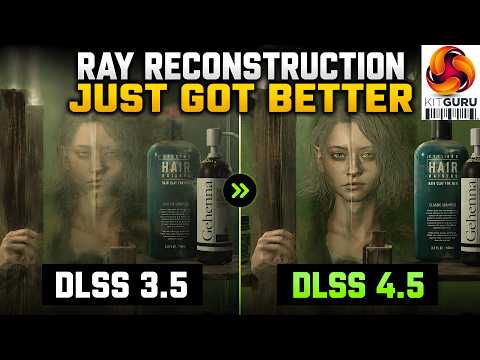
DLSS 4.5 Ray Reconstruction introduces a new second-generation Transformer model specifically designed to improve the reconstruction of ray-traced and path-traced images. Ray Reconstruction replaces traditional hand-tuned denoisers with an AI model trained on NVIDIA's supercomputers. Instead of simply cleaning up incomplete ray-traced data, the neural network analyzes spatial and temporal information from the game engine to reconstruct pixels that were not directly sampled.
The new model processes 20% more parameters and provides 35% more compute capability while maintaining similar performance to the previous generation. NVIDIA has also expanded its training dataset and improved the model's spatial awareness, temporal stability and lighting accuracy. The result should be cleaner and more stable lighting, reflections, and other ray-traced effects, particularly in situations where traditional reconstruction techniques can produce ghosting, flickering, or loss of fine detail.
🛠️How to Get DLSS 4.5 Ray Reconstruction
Getting started with DLSS 4.5 Ray Reconstruction is relatively simple. GeForce RTX users can access the new model through the NVIDIA App, without having to wait for every game to receive a dedicated update.
After opening the NVIDIA App, go to Graphics and select the game you want to configure. Under DLSS Override - Model Presets, choose Custom and select the new Ray Reconstruction model.
NVIDIA's DLSS Override system allows the latest models to be applied to compatible games even when the game itself has not yet been updated to explicitly reference the new model. This makes it possible to test DLSS 4.5 Ray Reconstruction in supported titles such as Cyberpunk 2077, Alan Wake 2, Indiana Jones and the Great Circle, DOOM: The Dark Ages and Resident Evil Requiem.
Because Ray Reconstruction is part of the DLSS rendering pipeline, the game must support the underlying DLSS technology and compatible Ray Tracing features. Results can also vary from one title to another, so NVIDIA recommends using the latest available game and driver versions.
In short: update the NVIDIA App and your GeForce driver, open the game's graphics profile, go to DLSS Override → Model Presets → Custom → Ray Reconstruction, and select the new model where available.
🎮30 Games Already Support DLSS 4.5 Ray Reconstruction
NVIDIA has made DLSS 4.5 Ray Reconstruction available through the NVIDIA App for 30 games. The current list includes:
- Alan Wake 2
- Avatar: Frontiers of Pandora
- Backrooms: Escape Together
- Call of Duty: Black Ops 7
- Crimson Desert
- Cyberpunk 2077
- Death Relives
- Directive 8020
- DOOM: The Dark Ages
- Enlisted
- EVERSPACE 2
- F1 25
- FBC: Firebreak
- Half-Life 2 RTX
- Hogwarts Legacy
- I Am Jesus Christ
- Incursion Red River
- Indiana Jones and the Great Circle
- Marvel's Spider-Man 2
- NARAKA: BLADEPOINT
- NTE: Neverness to Everness
- Portal with RTX
- PRAGMATA
- Resident Evil Requiem
- Samson
- Star Wars Outlaws
- Subliminal
- Sword of Justice
- The First Descendant
- War Thunder
The NVIDIA App's DLSS Override - Model Presets settings enable the technology, letting users select the new Ray Reconstruction model for supported games.
🎮Indiana Jones and the Great Circle Gets an Interesting Upgrade
One of the most interesting games on the list is Indiana Jones and the Great Circle, particularly for PC players already using its demanding Path Tracing mode. NVIDIA highlights improvements to effects such as snow, where the new model can significantly reduce ghosting and improve the stability of individual particles during movement. Other examples include Alan Wake 2, where fine details such as the lines on a CRT display can remain more stable, and PRAGMATA, where Ray Reconstruction improves the appearance of laser lighting and reduces residual artifacts after the effect disappears.
🎮Gears of War: E-Day Introduces RTX Mega Geometry
DLSS 4.5 is only part of NVIDIA's RTX push at Gamescom. Gears of War: E-Day will introduce RTX Mega Geometry, a new technology designed to improve Ray Tracing when dealing with extremely detailed game worlds. This is particularly relevant to Nanite, Unreal Engine 5's virtualized geometry system. In complex scenes, the geometry used for Ray Tracing can be simplified compared with the highly detailed geometry visible on screen. RTX Mega Geometry is designed to allow Ray Tracing to work with much more detailed Nanite geometry, potentially improving the accuracy of ray-traced shadows and reflections while reducing differences between the geometry players see and the geometry used by the ray-tracing system. NVIDIA says RTX Mega Geometry will debut in Gears of War: E-Day and is intended to become part of the broader DirectX Raytracing 2.0 ecosystem.

🎮More Games Are Embracing Path Tracing
The new generation of RTX features is also appearing in several major upcoming releases.
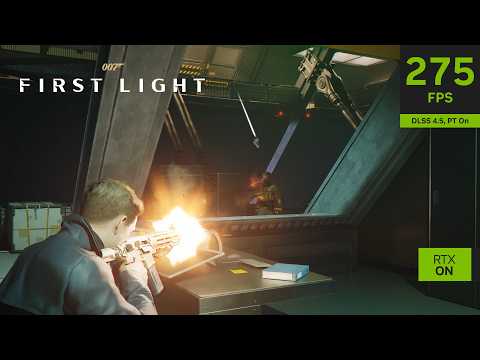
- 007 First Light will receive Path Tracing and DLSS 4.5 Ray Reconstruction on September 15, building on its existing DLSS 4.5 Super Resolution and Dynamic Multi Frame Generation support.
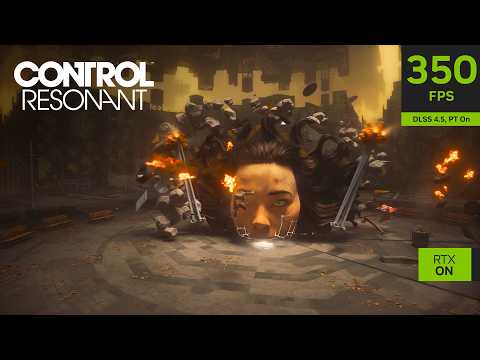
- CONTROL Resonant is showcasing Path Tracing alongside DLSS 4.5 in a new gameplay presentation.
- Gears of War: E-Day will feature RTX Mega Geometry and full DLSS 4.5 support.
- Tides of Annihilation will launch with DLSS 4.5 and Path Tracing.
- Black State will combine DLSS 4.5 with Ray Tracing.
- CINDER CITY will launch with DLSS 4.5 and Ray Tracing.
- Fragmentary Order will launch with DLSS 4.5 Ray Reconstruction and Ray Tracing.
- Silver Palace will feature Ray Tracing and DLSS 4.5.
- ANANTA will launch with DLSS 4.5 and Ray Tracing.
- Beautiful Light will combine DLSS 4.5 with Ray Tracing.
- AION 2 will launch in the West with DLSS 4.5 on September 30.
🖥️ DLSS 4.5 Is About More Than FPS
It is easy to think of DLSS primarily as a performance technology, but Ray Reconstruction serves a different purpose. It is about making better use of the limited ray-tracing information available for each frame. Path Tracing can produce exceptionally realistic lighting, but calculating enough rays for every pixel would be far too expensive in real time. Ray Reconstruction uses AI to fill in the missing information and reconstruct a higher-quality image from those samples. This becomes increasingly important as games move toward more extensive use of Path Tracing. Instead of simply throwing more rays at a scene, developers can combine sophisticated reconstruction with hardware-accelerated Ray Tracing to achieve a better balance between image quality and performance.
🖥️ DLSS 4.5 Continues to Expand the RTX Ecosystem
Ray Reconstruction is only one part of the wider DLSS 4.5 technology stack. The latest generation also includes the second-generation Transformer model for Super Resolution, improvements to Frame Generation, Dynamic Multi Frame Generation and 6X Multi Frame Generation on GeForce RTX 50 Series GPUs. NVIDIA is effectively attacking the problem from both sides: reconstructing better images while generating additional frames. For demanding technologies such as Ray Tracing and Path Tracing, that combination could become increasingly important as developers push visual quality further.